Varun Verma MD
  • About
  • Writing

Two Worlds: Healthcare Disparities in the Developing World 

2/19/2014

0 Comments

 
Originally appeared in The Hospital Leader: 
http://blogs.hospitalmedicine.org/Blog/two-worlds/

Anyone who has worked in Haiti quickly realizes that injustice abounds. I had rushed into the cramped curtained off area and found the pregnant woman with her eyes rolled back to 2-o’clock. She was not responding. Even when I yelled to wake her or when I rubbed her chest forcefully with a clenched fist, she lay silently drenched in her sweat. Moments later though, she started shaking, and her head, chest and arms lifted up violently off the bed repeatedly as she seized. A nurse tried valiantly to re-check the blood pressure (the first reading had been 70/40). When I asked what had happened, one of two foreigners (apparently midwives) standing in the labor and delivery area shrugged and casually informed me that the patient had been seizing for an hour. An hour? I told the nurse to drop the BP cuff and draw up 1000 milligrams of phenobarbital (the only anti-epileptic available at our hospital).

Practicing medicine in rural Haiti is in stark contrast to the United States, where as a hospital medicine physician — I am privileged to be surrounded by specialists, have multidisciplinary help in every field imaginable from social work to physical therapy, and access to seemingly unlimited resources. My local colleagues in Haiti; whether physicians, nurses, pharmacists or administrative staff function in a system where an individual wears infinite hats, and recognition for their effort is often lacking. Contrary to ignorant beliefs, Haitian professionals have options too, since they could get better paying jobs in the capital or even overseas — apparently 80% of Haitian trained doctors do end up leaving the island. Local staff is no less zealous than outsiders about ensuring social justice in the resource limited settings in which they work (though they may lack the twitter or blog posts to advertise so).

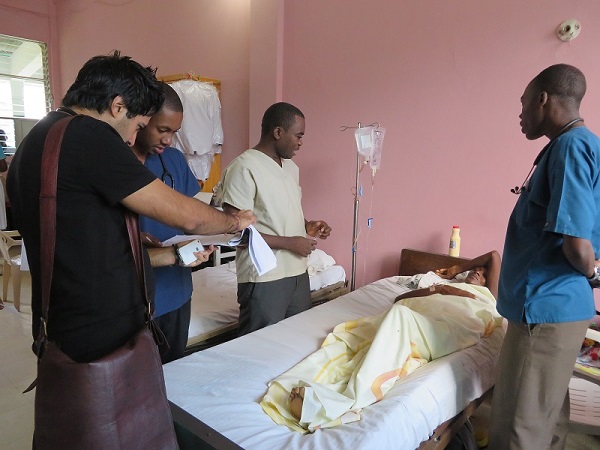
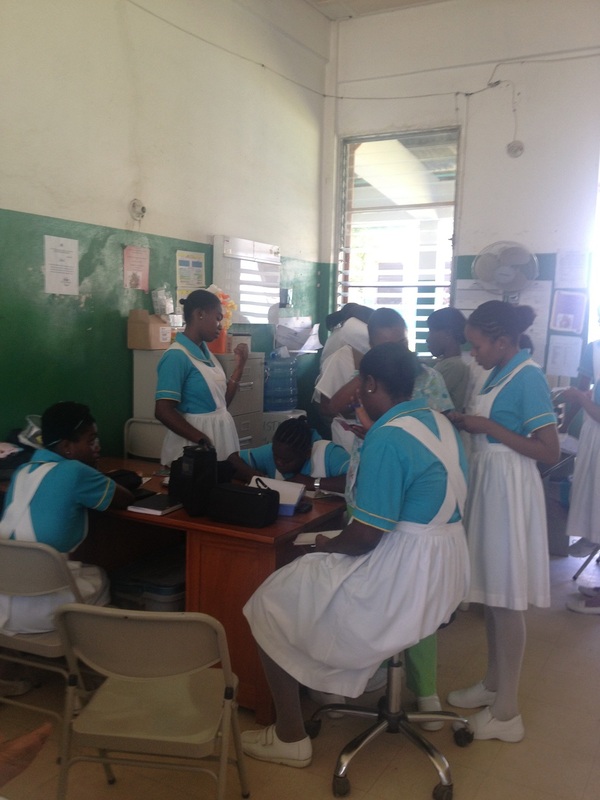
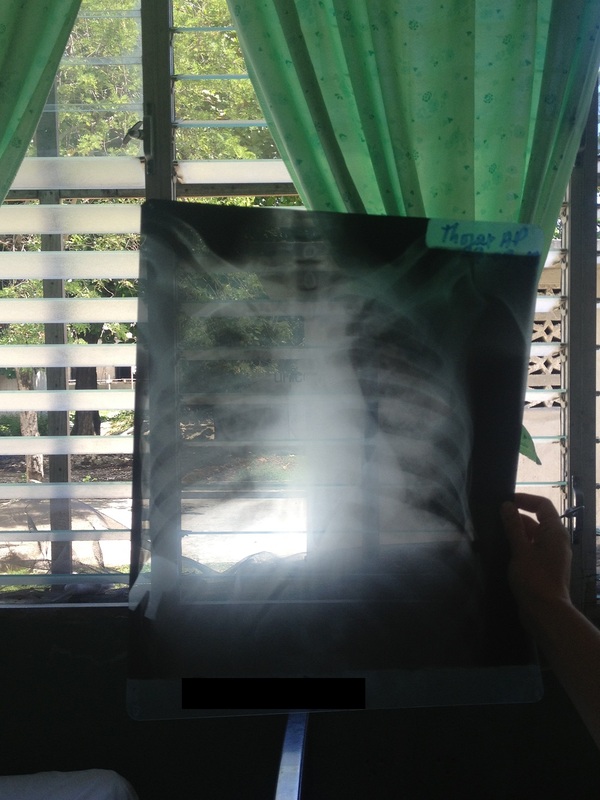
As part of my global health hospital medicine fellowship at UCSF I have been working in a Haitian Ministry of Health (MSPP) hospital in Hinche, a town in the mountains three hours from Port-au-Prince. My primarily responsibilities include teaching the social service residents during rounds (medical students who have graduated but not completed a residency), sometimes consulting on cases throughout the hospital, and rarely direct patient care. The system does not reply on my presence, and unsurprisingly Haitian doctors manage just fine during the six-months of the year I work in San Francisco. In reality, I learn a tremendous amount from my Haitian counterparts — professionals who practice medicine with limitations unimaginable to those of us accustomed to 21st century marvels. When I first arrived, I was distressed to discover that diagnostic capabilities consisted only of malaria smears, rapid HIV testing, and hemoglobin/hematocrit. On top of this I ran into insufficient lab reagents, broken EKG leads, and no defibrillator. I was however grateful for the availability of xray and portable ultrasound. By the end of my first three months I realized that to Haitian providers, ensuring quality care is a day-to-day undertaking, and not necessarily an excise culminating in a neat poster presentation for a research symposium. Death on the wards is prevalent and lives lost are particularly heartbreaking because they are often due to lack of systems and supplies we take for granted in the U.S.

After the phenobarbital, the young woman stopped seizing temporarily, but fifteen minutes had gone by and we still had no oxygen. After I yelled at no one in particular (and then apologized), five Haitian nurses dutifully lifted the patient and carried her down the hall to where an oxygen tank had been setup. The Haitian obstetrician solemnly advised me to use any required medication since the fetus was dead. After discussing with a Haitian internal medicine colleague, I administered more phenobarbital, and added antibiotics and antimalarials — my best guess given her high fever and dangerously low blood pressure. I also gave her magnesium, because unlike in the U.S. where physicians strive for an eloquent unifying diagnosis, in rural Haiti we are forced to treat empirically. We had no ICU, no CT scan to examine her brain and no Neurologist. The patient’s family arrived and reported that the seizures had been present intermittently for three days until they got to the hospital. I had used nearly all the phenobarbital our pharmacy had, and despite this — with a tongue blade wrapped in gauze between her teeth, the young woman died less than twelve hours later.

Partners in Health, the Boston based not-for-profit has been fighting against “stupid deaths” for thirty years, with its mission to provide a ‘preferential option for the poor.’ Through a revolutionary system of health care accompaniment and relentless advocacy, PIH has ensured widespread access to antiretrovirals and TB treatments, as well as many important wrap around services such as nutritional support. More recently ramping up efforts on the inpatient side, PIH has built a magnificent 300-bed teaching hospital in another location in Haiti’s central plateau not too far from where I work in Hinche. University Hospital in Mirebalais boasts a CT scanner, operating rooms, specialists, and even an electronic medical record system. Besides the physical structure and resources — the PIH flagship will ensure that generations of Haitian physicians have another place to complete residency training in internal medicine, pediatrics and surgery. Many avenues of impact exist — but locals are the only ones that can be truly sustainable agents of change.

Despite tremendous progress in Haiti, it is important to remember that four years after an earthquake that killed hundreds of thousands, and left nearly a million people homeless — there is still much to be done. The block schedule some of us enjoy as hospital medicine physicians places us in a unique position to traverse two worlds and consistently be engaged in providing quality care in resource limited settings. Since evidence of adverse effects of outsider involvement is abundant in Haiti, perhaps the best approach is to emulate or join with PIH in working with the Ministry of Health, resisting the temptation of trying to establish a shadow or parallel health delivery model. Collaboration and not competition is needed going forward if we are to cause a convergence of the two realities of healthcare delivery in our modern world.
0 Comments

Recognizing the Hard Work of Our Local Colleagues

12/4/2013

1 Comment

 
Picture
There can be no global health without local staff.

There are words in many languages that have no good English equivalent. During my work in Haiti, I’ve noticed my Haitian colleagues on occasion exhaling a phrase — “tet chaje” — which literally means “head charged.” More accurately, it describes a sense of being overwhelmed or conveying disbelief or frustration. Based on my limited experiences in the field, I can only begin to imagine the burnout that local providers face in resource-limited settings.

Unlike in places like the United States, where responsibility is shared within each role (we have scores of hospitalists in our department and dozens of resident physicians to assist on the wards), resource-limited settings often only have one person who is responsible 24/7 for a particular function in the healthcare system. Moreover, as outsiders in global health, eventually we all have the luxury of stepping away from chaos, and going home to healthcare centers with seemingly unlimited resources. In stark contrast, our local Haitian colleagues have little respite and are left to work in an imperfect system doing the best they can with the resources at hand. Their efforts are almost never adequately recognized; not by their own institutions, and not by any form of popular media willing to capture their dedication and commitment. Few positive feedback loops exist.

To mitigate burnout, healthcare organizations in the US have increasingly gone out of their way to recognize the dedication of staff. I’ve noticed that a few days in every month in our hospital there is an event recognizing the role played by different groups within the healthcare team. Sometimes it is a luncheon for nurses, an appreciation event for interns, or a thank you afternoon party for social workers. Activities like this may seem trivial at first (and even wasteful given the severe resource shortages in other places), but to workers who face arduous hours, who are constantly exposed to suffering, and whose efforts are not adequately acknowledged on a day-to-day basis — every small gesture counts, and likely helps to bring into focus why they do this work in the first place.

I often wonder how we can provide better encouragement and support to our local colleagues working in places like rural Haiti. Outsiders come and go, but the backbone of a healthcare system must rely on locals — doctors, nurses, community healthcare workers, mental health professionals, physical therapists, and countless others coming together and coordinating efforts in impossible settings. Contrary to common beliefs — local professionals choose to work in such settings. They forgo higher paying jobs in capital cities or abroad, and work with neglected populations because they share the same passion for social justice that foreigners do (though they may lack the Twitter following or a blog for self-promotion).

Increasingly, outsiders are being erroneously hailed as messiahs. In reality, we aim to serve a specific purpose — to exchange knowledge, skills, and provide backup if needed. To be frank, local providers are impressive since they possess an intimate connection to the population we hope to serve and also an enviable fund of knowledge. On rounds, my internal medicine colleague Dr. Pierre would often answer my questions before my electronic brain (smart phone) had loaded. Additionally, he recited best practices despite sometimes never having access to the described diagnostics or treatments. Similarly, my roommate Dr. Hamiltong, a general surgeon, performed complex surgeries alone that would inevitably involve multiple sub-specialties in the US. Their skills inspire me, but they will likely not be captured on magazine covers, or celebrated at global health conferences. While excellent patient care is foremost in all our efforts as providers, in the case of our local colleagues some recognition would be well-deserved. To be clear, I am not advocating that we massage individual egos, but that there be a consistent recognition of local staff (as opposed to the prevalent practice in global health circles of applauding outsiders for their great “sacrifice” for working in faraway places).

Recently, at the Lancet Global Health 2035 launch event at UCSF, economists and medical professionals discussed the real possibility of dramatic improvement in healthcare outcomes if low and middle-income countries started adequately investing in healthcare. Though it was inspiring to hear about the possibility of preventing millions of deaths by 2035, I believe that if these dreams are to be realized, a fundamental prerequisite is ensuring that there is adequate local staff present for implementation. Already a disturbing trend I witnessed during my brief time in Haiti was many physicians around me studying for the United States Medical Licensing Examination- presumably so that they could relocate and earn a fair wage, be appreciated as professionals, and function in a system where there is minimal (different) frustration. Credit needs to be given where it is due, and it is essential we find ways to support and encourage our amazing colleagues so that they may continue to be leaders and agents of change in their home countries.

Varun Verma
1 Comment

Innumerable Organizations, Zero Coordination

11/14/2013

0 Comments

 
Seeing the aftermath of typhoon Haiyan in the Philippines - heartbreaking images of people without any help or hope, and Anderson Cooper again bewildered on television by a government's lack of effective response - brings back memories of pretty much every single disaster in the last decade. The phrase "swift and coordinated response" has almost become a cruel joke because there is never the semblance of such from major actors during times of turmoil.

How many more disasters is it going to take for us to get our act together?

On first glance, it seems that the sheer scale of such events makes it impossible to plan. Lately though we have had plenty of opportunity for practice in the coordination of mass efforts to address tragedy (natural, and human-made). The 2004 Indian Ocean Tsunami reportedly killed 230 000 people, 2005 Hurricane Katrina was all the more tragic because it was marked by a pathetic response from the US Government, the 2010 Haitian earthquake left an innumerable number dead (estimates 30 000-250 000 dead) and the effects three years later are still widespread with homelessness, cholera and food insecurity. The terrifying list goes on and on with cyclones in Burma, tsunamis in Japan, floods in Pakistan - it seems there are no places that have been spared their share of suffering.

In all of these scenarios, hundreds of well meaning foreign "aid groups," organizations and agencies poured onto the scene, doing their best to alleviate suffering. I have no doubt that they helped in each and every case. But could they have done better? Can we do more when another inevitably tragedy strikes? The problem is that rarely do any of these groups talk to each other. Worse than this, they rarely share resources or expertise- essentially someone is reinventing the wheel each time. Furthermore, the public from whom they seek donations doesn't have a clear idea of who exactly does what (and I suspect neither do the groups themselves). Our news stations and social media channels boom with requests for donations, but it is a struggle to discern what Save The Children, World Vision and UNICEF do differently, and why they can't work together under one umbrella rather than competing for donations in times of crisis. Clearly competition in moments of turmoil is not best for the people suffering on the ground.

Ordinary people around the world have been incredibly generous during difficulties in foreign lands. Perhaps because the reality is finally sinking in that we as residents of this planet are all interconnected and a similar fate could befall any of us at any moment. President Obama outlined exactly what the U.S. Government is going to provide in addition to a disaster response team; "$20 million in immediate humanitarian assistance to benefit typhoon-affected populations, including the provision of emergency shelter, food assistance, relief commodities, and water, sanitation, and hygiene support" (via http://www.whitehouse.gov/typhoon). Interestingly the White house page also mentions another page where citizens can contribute donations http://www.interaction.org/ which claims to be "a united voice for global change" with 180 like-minded organizations. One doesn’t need to look very far down the "our members" page to realize that few of them have experience in disaster situations nor qualified personnel to be of any use working in the Philippines at this crucial point. The situation is akin to having an Ophthalmologist on hand when you have a shattered pelvis, all the impressive advanced-training in the world cannot make up for lack of experience in a relevant field. If groups are going to proudly display badges of “numbers helped” and “blankets handed out” then they also need to critically evaluate how many people they are failing due to lack of coordination with other groups.

There needs to be a chain of command, not a free for all by any and all organizations. The noble work of non-government actors certainly has a place - but it should be under the supervision of one coordinating party. When the government itself is incapable of taking the lead due to destruction in infrastructure or death of members, shouldn't the U.N. take charge? Isn't that one of the purposes for which it was created? If not, and I am sadly misinformed (or if UN staff are too busy holding meetings), then we need to create an organization with this one explicit mission - a FEMA v2.0 for world disasters (clearly not the FEMA during Katrina). If nothing changes, we will continue to witness the collective suffering of victims.

Varun Verma
0 Comments

The Vital Need for Greater Technology in Global Health

11/11/2013

0 Comments

 
Picture
 "Injustice anywhere is a threat to justice everywhere." Martin Luther King, Jr.  

This post is a question, an invitation and a challenge. How can we bring technologies we take for granted back home to those in the developing world? Many before me have spoken with outrage about the reality of two worlds; one of
abundance, and the other where people live like they have in centuries past. The situation is more complicated since even poor people may have some technologies like cellphones now, but vital lifesaving technologies remain nowhere in sight.  Some may argue that we still haven't solved the dilemma of how to provide basic care on a global scale, but I believe that the two don't need to be sequential. In actuality there are many scenarios in medicine where having a technology available is in fact necessary for the basic management of disease. We are doing our patients a disservice when they die from lack of access to a ventilator the same way as when they die from lack of access to an antibiotic. 

If one  looks back even a decade, there are health care delivery interventions present today in resource poor settings that seemed like a fairytale. Large scale organizations like The Global Fund to Fight AIDS, Tuberculosis and Malaria did
not even exist prior to 2002 and now reportedly it helps save 100, 000 lives every month. More recently there has been a movement to tackle non-communicable diseases (diabetes, heart disease, stroke, emphysema, cancer, and and mental
illness amongst others) since data reveals that they are the leading cause of death globally and 80% of deaths are in the world’s poorest countries (probably not all that surprising considering the unhealthy diet, exposures to toxins, hardships and lack of access to care that poverty brings with it). The field has done such a good job of building momentum for change. Why stop now?

Ensuring quality care in resource limited settings should be a given, but we need to do more than secure the supply of diagnostics and medications.  We need to move onto a second stage of global health work – advocating for the scale up of vital technologies. As a physician who practices both in one of the most advanced teaching hospitals in the world, and someone who works in rural Haiti – I am witness to striking disparities on a daily basis in what is available to help patients.  Undoubtedly every provider working in the field has similar stories, but two patient encounters while in Haiti have served as reminders to me that patients still die “stupid deaths” every day (to borrow a phrase from my Haitian colleagues). To be clear, this is in spite of the amazing work that has been done in other areas like vaccinations, providing anti-retrovirals to treat HIV, and community health worker programs.

During my first week here, a young woman came in to the internal medicine ward appearing rather well but with a complaint of shortness of breath. She had normal vital signs, appeared in no distress and had a normal physical exam. After some discussion with my colleagues, we ordered diagnostic tests including a chest x-ray and decided to observe her. Less than 48 hours later she was struggling to breath, and her mental status was compromised (and the chest x-ray was still not done). She required supplemental oxygen – which we provided from a tank. This worked at first until she decompensated further and what she truly needed was to be intubated and on a ventilator to buy us time to figure out what was wrong with her, and then to treat it. She ended up dying that night because of course we had no means to intubate her. Incidentally, there were a stack of two ventilators lying idly in the corner that I learned had been donated during the time of the 2010 earthquake. I was sad and incredibly angry to see the demise of a young woman who would have almost certainly seen the inside of an ICU in any well-resourced hospital. My colleague pointed out that there was no reliable electricity supply to plug the ventilator into, no steady delivery of oxygen (we had run out of tanks twice that week) and no respiratory therapists to ensure that things could run 24/7 as our patient would have required.

My second account is about a woman who presented with renal failure – struggling to breath, puffy, and with laboratory tests so elevated that my colleagues and I wondered how she was still alive. There is no hemodialysis available here. The patient and her husband shrugged when we conveyed how sick she truly was. She actually somehow did ok, and thankfully made it out of the hospital after we treated her with the medications we had available (not a substitute for dialysis). Perhaps unsurprisingly she returned a month later; sweating profusely and out of breath, carried in the arms of her husband – and this time both were panicked. My colleague turned to me as we examined her and asked if I heard what the patient said repeatedly while she desperately clung to our arms –“she told me she is going to die.”  The patient's sister stood beside her bed, hugging her around her waist, and giving her sips of water intermittently. We did our best to minimize her suffering by administering a benzodiazepine (anxiety medication) to calm her breathing and make her comfortable. She died less than 24 hours later.   Had dialysis been available I have no doubt the woman would not have died any time soon. This is the harsh reality of being a patient in a setting where otherwise abundant technologies are non-existent.

I do realize how costly technological interventions like ventilators and dialysis are, but cost is entirely an artificial creation (the health care debates raging in the US highlight this). Healthcare providers need involvement from other disciplines to
help us work on solutions like how to secure the electricity supply, and what to do when machines break. The real challenge lies in convincing change-makers that technologies we take for granted back home need to be mobilized quickly in places like Haiti, and not-necessarily waiting until we have perfected delivery of “basic” healthcare – because that may never happen. In addition to trumpeting our successes in the field of global health, we also need to bear witness to the horrific situations patients repeatedly face due to inadequate technologies, and advocate for change. The fact that we are at an unprecedented time in human history cannot be understated. We have the knowledge, wealth, and ability to eliminate health disparities. What we need is the consensus that all people deserve the benefits of modern technology, and the will to mobilize.

Varun Verma

0 Comments

Disservice In Global Health Work

11/6/2013

0 Comments

 
One of the aspects of global health work that inspires me is the potential to make tremendous impact in health care outcomes in places where human beings are constantly endangered. A few exemplary organizations have perfected strategies to partner with local forces and apply evidence based medicine to create sustainable change in the face of unimaginably scarce resources. Despite success stories however- there is an army of not-so-useful actors that abound, who despite “doing” something (often involving social media frenzies, fund raising and conferences filled with backslapping self-congratulation), ultimately have no lasting impact due to uncoordinated and isolated efforts. Working as a medical doctor in Haiti over the past three years- I have come to witness some other disconcerting occurrences in the course of my global health activities.

Anyone who has worked on the ground in a resource poor setting quickly realizes that bad things happen (even in noble quests), and yet accounts of failure may fall on deaf ears of colleagues and supervisors alike because they're viewed as unsavory. Unlike prevailing academic medical tradition where morbidity and mortality conference plays an important role in education, and more importantly in preventing future adverse events – I have found that few feedback loops exist for healthcare providers working in resource poor settings. Oft cited reasons include cultural inappropriateness of such exercises as well as the 'politics' involved. Yet, by avoiding all discussion of what went wrong we are vastly underestimating the professionalism of our local colleagues, and are also magnificently failing our patients.

The vital need for honest self-policing and assessment aside, it has also become apparent that writing originating from some corners has become one sided and essentially propaganda of their own self importance. Clearly if the entire field of global health was so successful, we would not still be battling plagues long after effective cures were discovered. Much like negative clinical trials in the medical literature, I've found that most accounts of how consistently we fail our patients will not be published unless there is an accompanying silver lining or morale boosting lesson. Undoubtedly this stems from a fear that donors will be repelled by anything short of an inspirational seven minute speech accompanied by a neat slide-show. Since we are in the practice of medicine and not in the field of marketing, in addition to trumpeting our successes we also have a duty to report the horrific scenarios our patients repeatedly face due to inadequate diagnostics, supplies, and staff – and to push for change.

As if this neglect wasn't bad enough, it seems that more and more global health and development conferences these days seem to revolve around underlining hyped-up successes (often by professional circuit speakers), rather than the forging of real alliances between the different actors to enact change. True cooperation between those involved in health care delivery in resource limited settings may ultimately reduce waste, prevent duplication of efforts, and increase activity in areas of neglect. Instead, many of us seem to be constantly reinventing the wheel. Cooperation needs to be grounded on the level of local governments, people and organizations based in the places we serve, rather than trying to circumvent them – as 100 years from now when outside interests may have shifted the locals will remain.

Perhaps the reason there is a fundamental absence of cooperation is that increasingly organizations are fueled by greed (whether NGOs, foundations, universities or social entrepreneurs). Rather than profit, they compete for influence; desiring their brand stamped over people, product and infrastructure. Sometimes this is even at the cost of inferior care – so long as another organization is not “in charge.” Haiti is the perfect example of a situation where despite a relatively small population (10 million) and billions of dollars being poured in since the 2010 earthquake (through a disproportionately large number of organizations), we see few improvements in health or socio-economic indicators. Organizations here do simply do not talk to each other. They exist in their own putrid bubbles, often a stone's throw away from similar (if not identical) organizations. They do not share resources, they don't discuss strategy or goals, they just do. What they precisely do is often unclear– especially to the government / ministry of health – who are held prisoner to extremely limited resources and thus unable to enact meaningful health policy independently.

Despite my cynicism, laudable work is being done by a small number. Some groups exclusively employ Haitians to positions of leadership so that they may shape their country's future and are not dependent on the interest of outsiders. Other organizations have expanded their focus from purely medical delivery to fighting for adequate food, water, sanitation and housing – desperately trying to convince others (of the seemingly not-so-obvious reality) that all are interrelated. A select few refuse to accept the dogma that high quality care cannot be afforded to those most endangered in low resource settings and have taken arduous steps to ensure state-of-the-art facilities and training of local providers to match. For those working in Haiti for the long haul it seems a constant struggle to maintain funding streams to ensure that vital life sustaining work can continue once the reporters and cameras have departed. As I continue medical work in Haiti, my sincere hope is to see more honesty and cooperation between all organizations here – the present isolated path followed by some is not only unsustainable but also a disservice to our patients.

Varun Verma
0 Comments

Obstacles and modern marvels

10/15/2013

0 Comments

 
Picture
Haiti is always eye opening for me. From the magnificent clouds that caress the landscape, the overwhelming kindness of the people (many of whom outwardly have very little), to the prevalent horrors that afflict human beings – there are many “shocking” things here. As an outsider it is easy to be discouraged quickly by all that is apparently missing from the healthcare system, but one must not forget that Haitian nurses and doctors have been providing lifesaving care with any and all of the resources available to them.

Had it not been for the work of Partners in Health (PIH) during the last three decades, the number of preventable deaths in Haiti would have been innumerable. A month ago I was privileged to witness the magic of a magnificent new teaching hospital, Hôpital Universitaire de Mirebalais, built by PIH in the Central Plateau. It has abundant supplies, many providers, and excellent diagnostics including a CT scanner. In addition to providing high quality inpatient care in a resource limited setting (a feat that naysayers said was impossible) they are starting residency programs to train Haitian physicians who will ensure access to care for the most vulnerable of patients.

Of course not every hospital in a resource strained stetting can be Mirebalais. An hour away by road where I am working is the Haitian Ministry of Health (MSPP) district hospital in Hinche, and at first glance things stand in stark contrast. The internal medicine wards are three dreary rooms with a dozen beds each. There are no fans, no seats for visitors, and family members assume responsibility for feeding and bathing loved ones, as well as for cleaning the ward. I am discouraged to learn that there is a sporadic dearth of lab tests (we currently only have hemoglobin, hematocrit, CD4 counts, and urinalysis). On closer examination though, I see many marvels of modern medicine available to manage our patients; antibiotics, antiretrovirals for HIV, oxygen, xray and ultrasound. Our Haitian colleagues are used to practicing medicine with limitations– essentially relying on astute clinical skills and treating patient empirically when tests are not available. Now with the existence of Mirebalais the hope is that thoughtful transfers can be made when excellent care cannot be provided in Hinche. There may not always be lab tests to analyze the fluid, but we are able to drain swollen abdomens and lungs surrounded by fluid, and provide actual relief to suffering patients. Along the way our Haitian colleagues have taught us the art of healthcare without access to limitless diagnostics.

There is no denying that our sickest patients in Hinche would easily be in an Intensive Care Unit (ICU) in the United States. We care for a young man with AIDS and suspected PCP pneumonia who has an oxygen saturation around 75%, which hardly improves with the available oxygen via nasal cannula. While I stress over the lack of noninvasive ventilation (bi-level) or ability to intubate patients, my roommate who is a Haitian surgeon casually informs me that during operations under general anesthesia the nurse anesthetists must manually bag their patients. Our patient has slowly recovered as we treated him with an antibiotic and a steroid (bactrim and prednisone), and finally after three weeks of treatment he is almost ready for discharge. He will be plugged into the community health HIV services made possible by PIH in the Central Plateau. His survival in Hinche is a testament to the available and effective treatments in rural Haiti, but also proof of the creative solutions that our Haitian colleagues have been forced to employ as a result of constantly limited resources.

One morning as we begin rounds we learn that the hospital has run out of oxygen tanks. The charge nurse handles the situation and assures us that a new delivery will arrive in the morning (thankfully our patients remain stable until then). Every organization working in Haiti is similarly being challenged on a moment to moment basis; on another occasion we visit the Red Cross next door only to be informed that they have run out of blood. What I witness here reminds me that big interventions in global health are essential– research, antiretrovirals, large populations based efforts including vaccine drives and bed nets, but scant supplies also threaten patient safety. Although strides have been made in ensuring quality care, it is imperative that we keep advocating for the things we take for granted back home, things that may ultimately determine the difference between life and an anonymous death.

*** Originally posted by Varun Verma, MD on Oct 15, 2013 at the following website-
http://globalhealthcore.org/2013/10/15/obstacles-and-modern-marvels/

0 Comments

Resilience

8/20/2013

1 Comment

 
Picture
Woch nan dlo pa konnen doule woch nan soley.”
 “The stone in the water does not know the pain of the stone in the sun.” -Haitian Proverb

Approximately 1300 days have passed since an earthquake leveled Port-au-Prince on January 12th 2010. Many of us are aware of the horrifying statistics in the wake of the disaster; an estimated 100 000 – 300 000 dead, 200 000 injured, and a million people left homeless due to the collapse of shoddy infrastructure around the Haitian capital. Perhaps some less familiar, but equally shocking statistics include the colossal “lost income” payment to France for the former slave colony winning freedom during the revolution (equivalent to $20 billion in today’s date). The earthquake was of course not the first disaster precipitated by a natural occurrence in Haiti – as tropical storms and hurricanes have inflicted great misery in the past.

I first worked in Haiti six months after the 2010 earthquake and what I observed seemed like widespread hopelessness. Patients sat in long queues in medical clinics waiting to be seen. They did not converse, they started blankly ahead, and then they flatly reported non-specific complaints that could not be cured by pharmacology. My patients almost certainly were suffering from a combination of depression and PTSD resulting from many of their loved ones being killed or maimed. It became evident quickly that they also struggled with homelessness, food and water insecurity and staggering unemployment amidst few social protections. On closer examination, I realized that initially what seemed like hopelessness in the face of remarkable terrors inflicted on the population both by other human beings and by Mother Nature- was actually a spirit of resilience second to none.

Labeling Haitian people as depressed, hopeless, beaten down victims of circumstance is inaccurate as it ignores the tremendous ability of the people to overcome adversity that is evident throughout history. Haitians are today – as they have been in over two hundred years – the agents of change and the life force in the transformation of their homeland. For every one “heroic” foreigner who is recognized for their tremendous commitment and sacrifice in working in a strange land –there are dozens of Haitians who go unrecognized for their undying commitment to bettering the lives of their fellow countrymen.

Every visit to Haiti teaches me of the daily struggle that Haitians face for survival. On a recent mobile health clinic with UCSF Fellows, Partners in Health, and Harvard Global Health Equity Residents – I had been mentally prepared for a challenging walk up a steep hill in order to reach our patients. What greeted our group was in fact a trek up treacherous rugged terrain in blistering heat, an endless climb amidst mountains, only to arrive at a place without running water, latrines, and certainly no infrastructure or amenities. The population – our patients – had to make this arduous climb and dangerous decent on a daily basis in order to get food, water, supplies (and heaven-forbid access to healthcare if they could ever find it).  All the while I realized that as we, drenched in sweat, struggled to negotiate the terrain, shoeless Haitians passed us carrying weights on their backs and heads, conquering the landscape because they had no other option but to persevere.

During a two-week training in the Central Plateau of Haiti as part of my UCSF Global Health Hospital Medicine Fellowship I can’t help but be impressed by the local Haitian healthcare providers we have worked along side of. They seem unconcerned with getting their names on research publications, tenure, careers and job security. Contrary to Western views; in fact they have options too – and do this work because their spirit compels them. Some of their predecessors took off to Canada and the United States to earn a fair wage as professionals and security for their families, and to this day some of their peers work in the private sector in Haiti earning 5X their income. These brave souls choose to stay and stand beside their brothers and sisters. They choose to work within an under-resourced healthcare system, in partnerships with a new government struggling to raise funds for its treasury, and above and beyond, they chose to allow us – foreigners – the privilege of working with them (even though we have repeatedly and magnificently failed them in many of our interactions previously).

While I leave Haiti temporarily to return to UCSF, I hope to remind others not to mistake incredible resilience for pervasive hopelessness. The Haitian people exemplify what it means to stand up after being knocked out – from the inception of their nation and brutalization by a colonial power, to the repeated insults they have endured by natural and unnatural forces throughout the last two hundred years. They have undoubtedly survived, and I look forward to witnessing further progress in their homeland as a result of their dedication

.*** Originally posted by Varun Verma, MD on Aug 20, 2013 at
http://globalhealthcore.org/2013/08/20/resilience/
1 Comment
Forward>>

    Categories

    All
    Global Health
    Healthcare IT

    Archives

    July 2016
    September 2015
    February 2015
    December 2014
    November 2014
    October 2014
    August 2014
    July 2014
    March 2014
    February 2014
    December 2013
    November 2013
    October 2013
    August 2013

    Tweets by @VarunVermaMD
    View my profile on LinkedIn

    RSS Feed

Powered by Create your own unique website with customizable templates.